
REVIEW · CANYON ZIPLINE TOURS
Cañon City: Royal Gorge 11-Line Extreme Zipline Experience
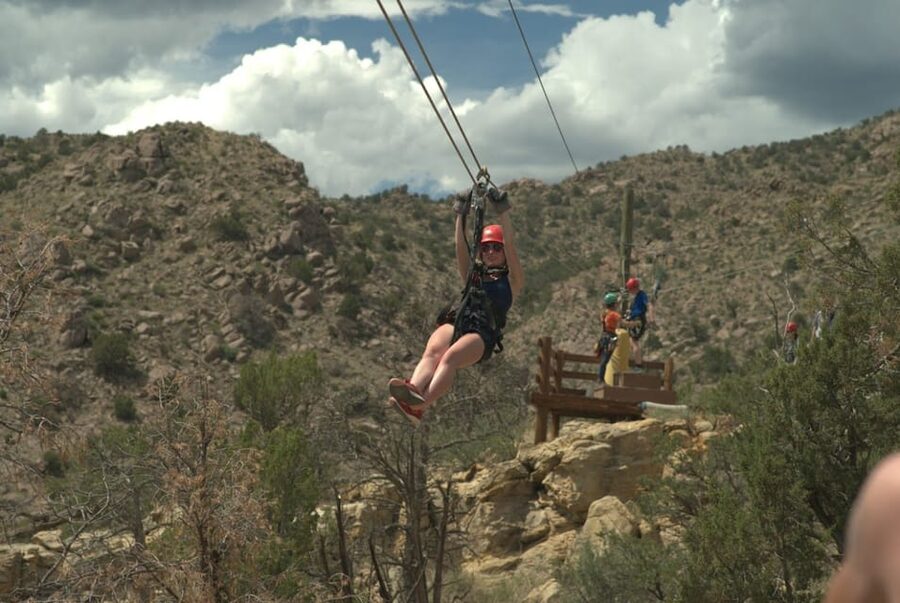
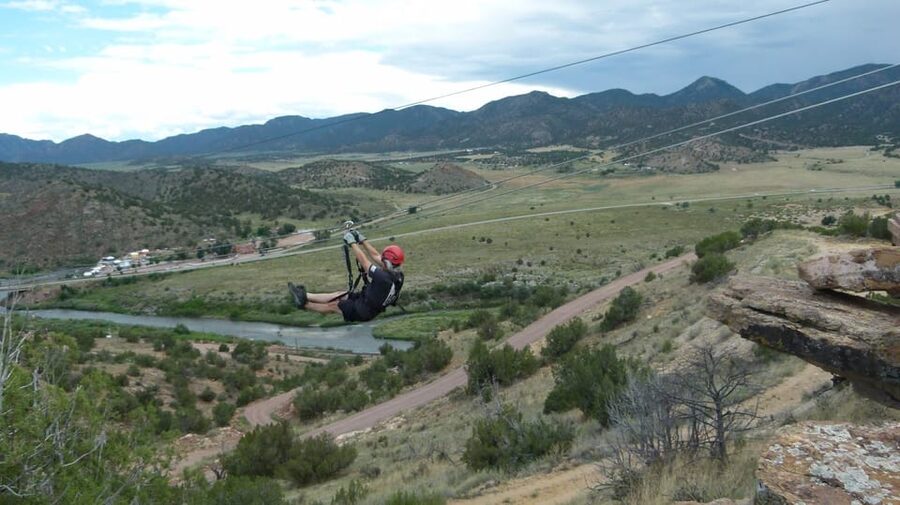
The headline here is hard to miss: you get to ride North America’s fastest zipline, with the top line reaching 1,700 feet and the Arkansas River far below. The course builds toward a dual racing line and a choice of two dramatic finishes from a seven-story tower.
I like the careful ground school and the small groups, limited to eight people. I also like having a real choice at the end: leap 30 feet with the Flightline Free Fall, or take the True Blue belay used by firefighters and military tactical teams. The main drawback is the physical demand. Reaching the tower feels like climbing about 10 flights of stairs, and you must control your speed and pull yourself along the cable if you lose momentum.
Key points to know
- The fastest line reaches 1,700 feet: This is a speed-focused course, not a gentle introductory ride.
- The tour lasts about three hours: Much of that time includes training, climbing, gear checks, and moving between lines.
- The final race line runs side by side: You can finish with a 1,200-foot race to a massive seven-story tower.
- You choose your final challenge: Take a 30-foot free fall, or use the True Blue belay for a controlled descent.
- The weight range is strict: You must weigh between 70 and 250 pounds.
- Guides shape the experience: Rick, Brandon, Tarzan, Eric, and Justine have all led tours, with energy and reassurance both part of the job.
Eleven lines above the Arkansas River
Royal Gorge Epic Adventures packs this three-hour experience with more than a single thrill ride. You move through an 11-line course that climbs, crosses open air, and finishes with a choice of tower descents.
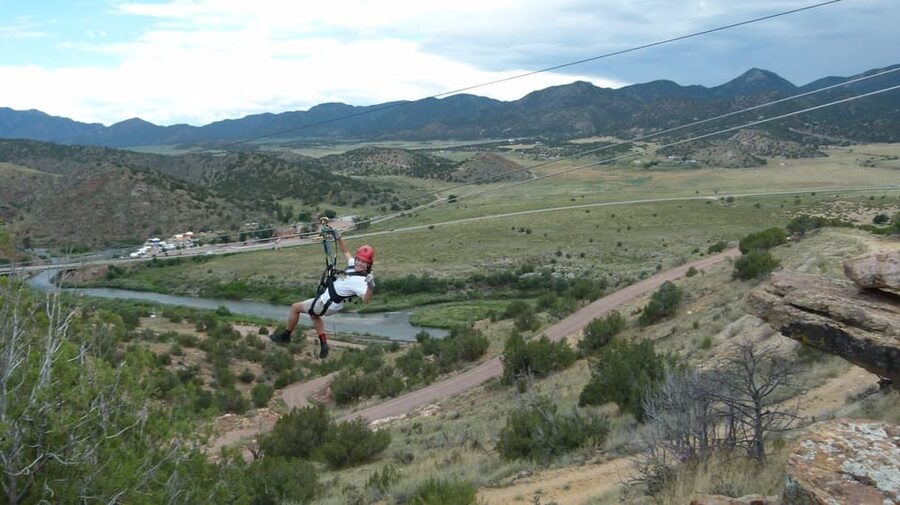
The setting does much of the work. From the lines, you look over mountain views and down toward the Arkansas River. This is not a zipline tucked into a small wooded park. The open views and height are a big part of the reason to book it, but they also make the experience feel serious from the start.
The advertised top speed is the main attraction. The fastest line reaches 1,700 feet, giving the course a strong sense of progression. You begin by learning the basics, then work toward the faster and more demanding lines. That gradual build matters if you are excited but not already comfortable with ziplining.
I would not book this expecting a quiet scenic ride with a little excitement added. The word extreme is doing useful work here. You will need to manage your body, your braking hand, and your nerves while paying attention to the guide’s instructions.
More Canyon Zipline Tours in the USA
- Bighorn Sheep Canyon Raft and Zipline – Class III Rapids, 9 Zip Lines, & lunch
★ 5.0 · 228 reviews - Zipline Adventure in the Snake River Canyon
★ 5.0 · 91 reviews - Gravity New River Gorge Zip Lines
★ 5.0 · 43 reviews
Ground school comes before the first launch
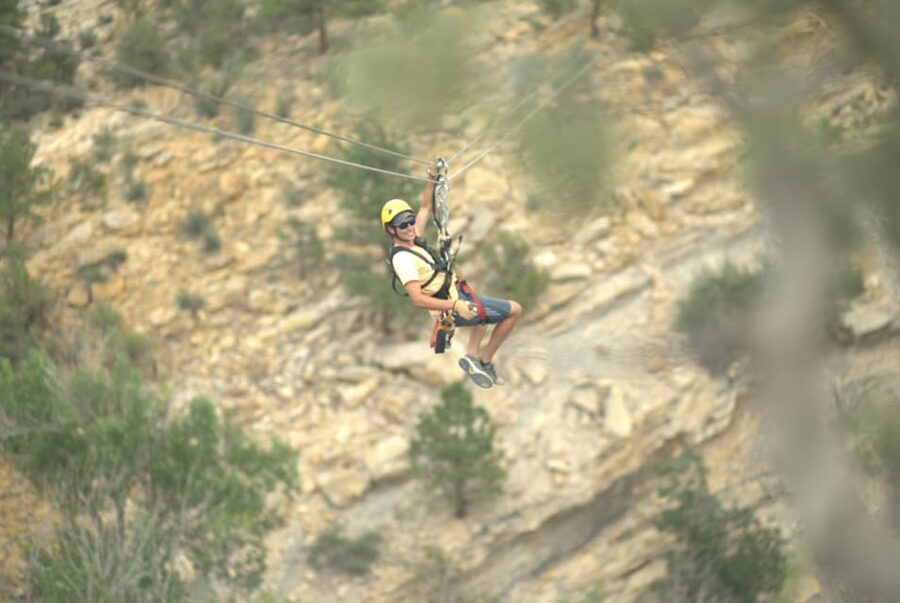
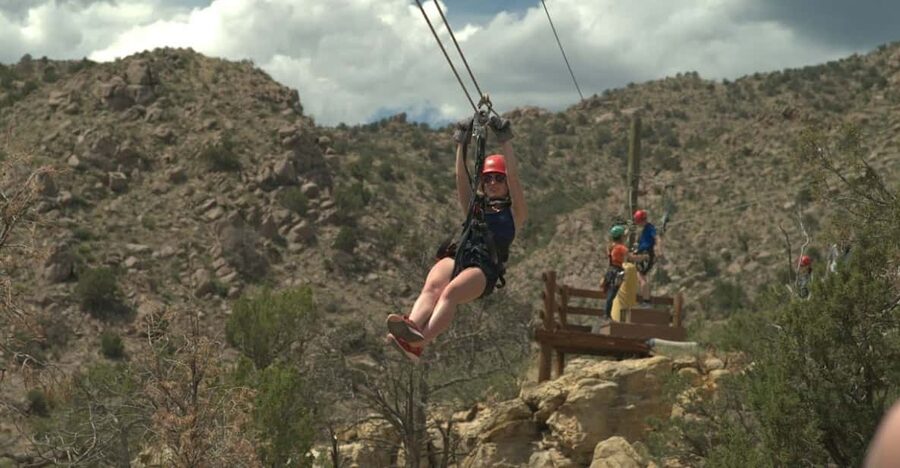
The tour begins with a safety orientation and ground school. This is where you learn how to use the seat harness, chest harness, trolley system, two lanyards with secure clips, gloves, and helmet.
The equipment resembles rock-climbing gear, but it is designed for a zipline course. Your guides teach you how to attach to the cable, control your speed by tensioning the line with your gloved hand, and prepare for landing. You are cleared to begin only after the basic skills are in place.
This training is more than a formal briefing. You must be able to control how quickly you travel and slow yourself as you approach each platform. If you lose momentum before a landing platform, you must also be able to pull yourself along the cable for a few feet.
That physical requirement is easy to underestimate. The ride itself may look effortless from the ground, but your hands, arms, and core have work to do. If you have limited upper-body strength, ask yourself honestly if you can brake and pull forward while suspended in a harness.
The safety system includes course construction, equipment checks, guide training, and operating procedures. You still need to follow instructions closely. No safety system removes the need for you to use your braking hand correctly or stay attentive at each platform.
The climb to the seven-story tower
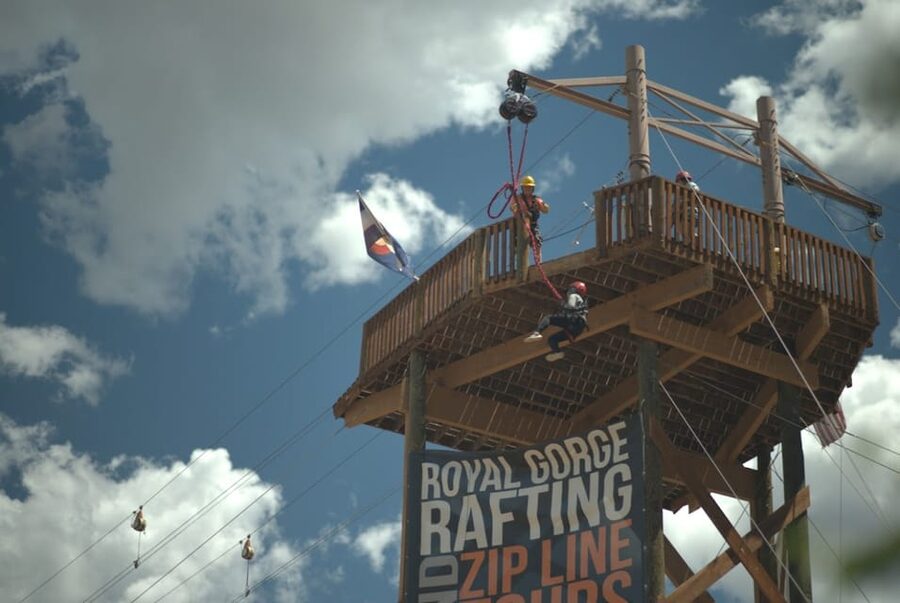
The course includes a climb to the top of a large tower. The effort is compared to walking up 10 flights of stairs, so this is one of the most important practical details in the entire experience.
You do not need to be an athlete, based on the information provided, but you do need to handle a sustained climb and the movement required by the course. The tower climb can feel more demanding than a short amusement-park zipline setup, especially before the final lines.
The height adds to the excitement. It also changes how the experience feels for anyone uneasy with exposure. You may enjoy the first lines and still find the tower finish more intense. That is not a flaw, but it is a reason to think carefully before booking.
Wear clothing and shoes that let you move comfortably, though the supplied information does not specify a dress code. The important point is to arrive ready for stairs, harness work, and repeated launches and landings.
The 1,700-foot speed line
The fastest line is the course centerpiece. At 1,700 feet, it gives you a long run through open mountain air and a clear sense of speed.
You are not simply attached and sent off without control. Your hand position affects your speed, so the ground-school lesson becomes practical here. You must balance the urge to race with the need to arrive at the landing area under control.
This is where the scenery and the mechanics meet. You can look toward the mountain views and Arkansas River, but you also need to listen to your guide and prepare for the landing. That combination makes the line more involving than a passive ride.
If speed is your main reason for booking, this is the feature to focus on. If you mainly want photos or a relaxed view, the need to brake and manage your approach may make the course feel more demanding than expected.
The small group limit helps here. With no more than eight participants, instructions can stay focused, and the guides have fewer people to monitor at each platform. It also means the tour does not feel like a large conveyor belt of harnesses and helmets.
Same trees, a different way down:
- Koloa Zipline in Kauai
★ 5.0 · 6,764 reviews - Oahu’s North Shore: 8-Line Zipline Adventure
★ 5.0 · 3,616 reviews - 7-Line Zipline Experience in Sevierville
★ 5.0 · 2,872 reviews - 7-Line Maui Zipline on the North Shore
★ 4.5 · 1,648 reviews
The final 1,200-foot side-by-side race
The last line is a 1,200-foot dual racing line. Two people can travel side by side, turning the final zip into a contest rather than a solo finish.
That format adds a social element without changing the physical requirements. You still control your own speed and landing, but you may also find yourself trying to keep pace with the person beside you. I would treat the race as a bit of fun, not as a reason to ignore the braking instructions.
The line lands on a massive seven-story tower. Reaching that tower does not end the action. Instead, you choose one of two final options.
This is a smart course design choice because it lets you set the final level of intensity. You can make the last moment a leap, or choose a controlled descent that still uses the height and structure of the tower.
Choosing between Flightline Free Fall and True Blue
The Flightline Free Fall sends you off the tower for a 30-foot free fall. The system then lowers you slowly to the ground below.
That option is for people who want a clear leap-of-faith moment. It is brief, but the anticipation before stepping off may be the strongest part. You have already spent time climbing and ziplining, so the free fall gives the tour a distinct final punch rather than simply repeating the same ride.
The True Blue belay is the alternative. It is used by firefighters and military tactical teams, and here it gives you a way to descend without making the 30-foot leap.
Do not mistake the alternative for a lesser finish. It still involves the tower and a controlled descent, but it removes the part that worries many people most: stepping into open space. If you are unsure about the free fall, choose True Blue without feeling pressured to prove anything.
The ability to decide at the finish is valuable for mixed groups. One person may want the free fall while another prefers the belay. The supplied information does not say that every participant must choose the same option, so ask the guides on site if your group wants different finishes.
The guides matter more than the equipment
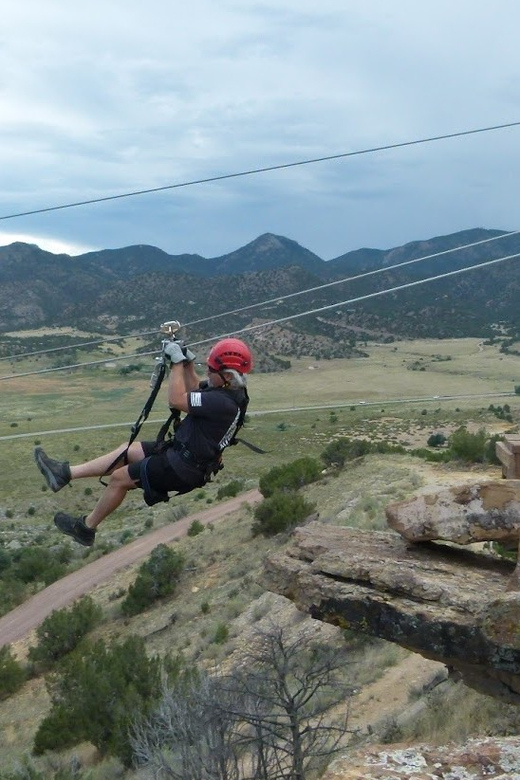
A zipline course can have impressive hardware and still feel cold or confusing if the guides rush their instructions. Here, the guide names associated with the tours include Rick, Brandon, Tarzan, Eric, and Justine.
Rick and Brandon were praised for making the experience memorable and for creating a strong sense of fun. Tarzan brought infectious energy, while Eric was described as reassuring. Justine and Rick were also singled out for being fun and well informed about the activity.
Those details point to an important balance. You want guides who keep the mood lively, but you also need clear instructions when you are clipped to a cable high above the river. A good guide must do both.
The small-group format gives the staff room to help with nerves, technique, and the order of the course. It also means you are not lost in a crowd if you need a reminder about braking or landing.
Guide assignments can change, so do not book expecting a particular person. The useful takeaway is that the guide role is central here. If you feel nervous, speak up during ground school and use the training time to get comfortable before the first line.
What the $168 price means
The listed price is $168 per group up to one person, so it is effectively priced for a solo participant under the booking details provided. Taxes and fees are included, along with all required safety equipment and the safety orientation.
That is not a bargain-priced amusement ride. The value comes from the length of the experience, 11 lines, the 1,700-foot speed line, the tower finish, and the choice between the Flightline Free Fall and True Blue belay.
The three-hour duration also matters. You are paying for instruction, gear fitting, movement through the course, tower access, and several lines, not just the seconds you spend in the air. If you want a full activity rather than a quick add-on, the price is easier to justify.
I would compare this with the kind of day you want in Cañon City. If you are seeking the fastest possible zipline and a high-action finish, the cost fits the product. If you only want to sample ziplining once, a shorter and less intense option may suit you better, though no alternative price is provided here.
You can reserve now and pay later, which helps if you are building a Colorado schedule. Cancellation is free up to 24 hours before the experience, and a weather cancellation allows you to rebook or receive a refund of the purchase price.
Weight, fitness, and weather rules
The weight range is strict: 70 to 250 pounds. The activity is not suitable for people over 250 pounds, pregnant women, or people with back, heart, or mobility problems.
You also need to perform three basic physical tasks:
- Control your speed by pressing your gloved hand against the cable.
- Pull yourself along the cable a few feet if you lose momentum.
- Climb to the top of the tower, with effort similar to 10 flights of stairs.
The course runs in rain or shine, but lightning nearby closes the course. Extreme winds can also shut it down. Advance notice may not always be possible, so keep some flexibility in your Cañon City schedule.
If the course closes for weather, you can rebook or receive a refund. That policy is useful, but it does not prevent a same-day change. Avoid scheduling an important event immediately after this activity if a delay or cancellation would create a problem.
Instruction is in English. That matters if you need detailed safety directions in another language, since no other language is listed.
Who will enjoy this most
I would recommend this to an active adult who wants speed, height, and a proper physical challenge. It is a strong fit for someone who likes the idea of managing the ride rather than simply sitting back while an operator does everything.
It also suits a small group of friends who want a shared finish. The side-by-side final line creates a natural bit of competition, and the two tower choices let people set their own comfort level.
I would think twice if you have a back or heart condition, limited mobility, are pregnant, or cannot meet the weight rules. I would also think twice if heights make you freeze, since the tower and open views are not minor parts of the course.
Nervous first-timers can still enjoy it if they meet the physical requirements and take the ground school seriously. The reassuring guide style associated with Eric and the upbeat approach associated with Tarzan suggest that the staff understand both sides of the experience: you want a thrill, but you may also need a calm voice before launch.
Should you book the Royal Gorge 11-Line Extreme Zipline?
Book it if you want a serious three-hour adventure with the fastest line, broad Arkansas River views, and a final choice between a 30-foot free fall and a controlled tactical-style belay. The 11 lines and small group make the $168 price easier to defend for someone who wants more than a quick ride.
Skip it if your main goal is a gentle scenic activity, or if the 10-flight tower climb and cable-control requirements sound beyond your comfort or strength. Read the weight and health restrictions carefully before paying.
For the right person, this is a well-structured progression: learn the skills, build speed, race on the final line, then choose how boldly to leave the tower. That is a full afternoon of action, not just a photograph from a platform.
FAQ
How long does the Royal Gorge zipline experience last?
The activity lasts about three hours, including ground school, safety preparation, the 11-line course, the tower climb, and the final activity.
How fast is the fastest zipline?
The highest-speed line reaches 1,700 feet, and it is promoted as the fastest zipline in North America.
How many people can join one tour?
The small group is limited to eight participants.
What are the weight requirements?
Participants must weigh between 70 and 250 pounds. People over 250 pounds cannot take part.
Can I choose how the experience ends?
Yes. At the final tower, you can choose the Flightline Free Fall, which includes a 30-foot free fall, or the True Blue belay, which provides a controlled descent.
What happens if bad weather closes the course?
The course closes if lightning is nearby or winds become extreme. If the tour is canceled because of weather, you may rebook or receive a refund of the purchase price.
Newest lines around the USA
- Hakalau: 9-Line Zipline Adventure with Umauma Falls View★ 4.5 · 7 reviews
- Twin Falls: Zip Line Tour★ 4.1 · 8 reviews
- Tree Tops Zip Line Canopy Tour★ 5.0 · 32 reviews
- New River Gorge, WV – Zip Line Tour★ 5.0 · 7 reviews
- Zipline Canopy Tour- ArborTrek at Smugglers Notch Resort★ 5.0 · 9 reviews
- Wildman Zip Line Tour★ 5.0 · 10 reviews
- Zipline and Adventure Tower at Ryze Adventure in Missouri★ 5.0 · 4 reviews
- Zipline the Goliath in The Smoky Mountains★ 5.0 · 5 reviews
Canyon Zipline Tours, compared.
Zipline Croatia: Cetina Canyon Zipline Adventure from Omis
Read our review →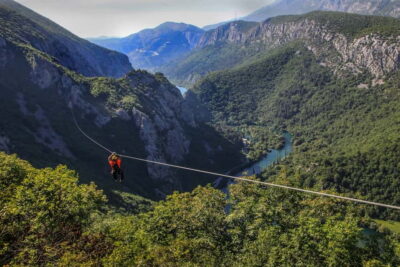
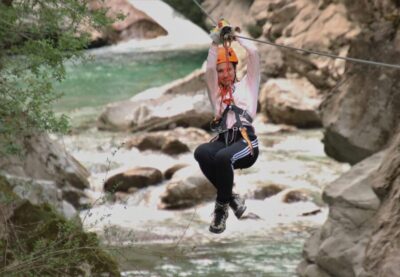
Canyon Učja — The Longest Zipline Park in Europe
Read our review →Bovec Zipline – canyon Ucja – the longest zipline in Europe
Read our review →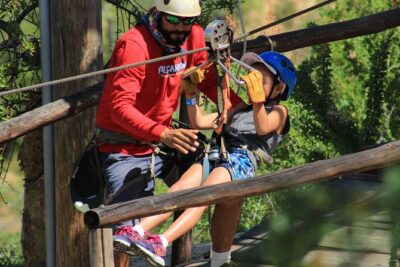
Ziplines Adventure – The Fastest & Best ones Crossing the Canyon
Read our review →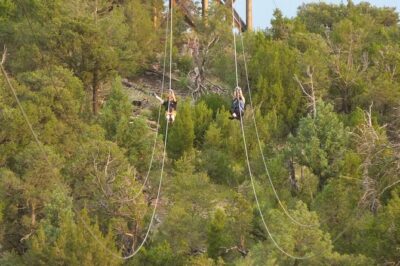
Bighorn Sheep Canyon Raft and Zipline – Class III Rapids, 9 Zip Lines, & lunch
Read our review →
Alanya/Side/Antalya: Canyon Rafting, Buggy & Zipline Tour
Read our review →Browse the lists this ride appears in