
REVIEW · WATERFALL ZIPLINE TOURS
Twin Falls: Zip Line Tour
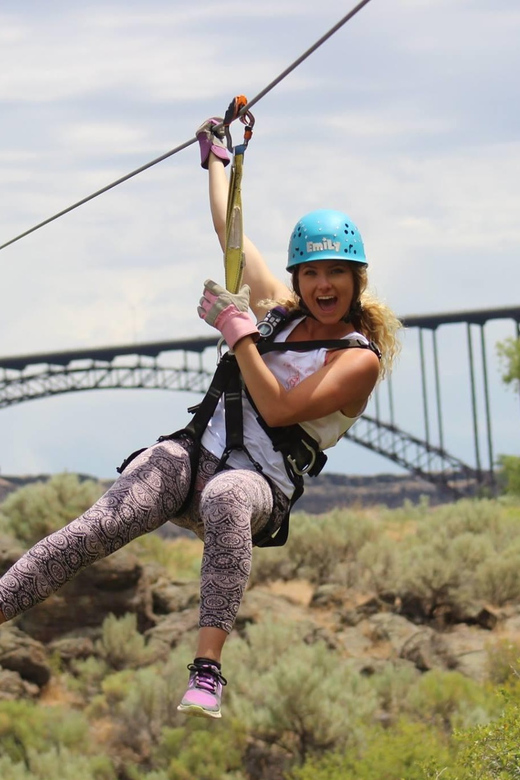
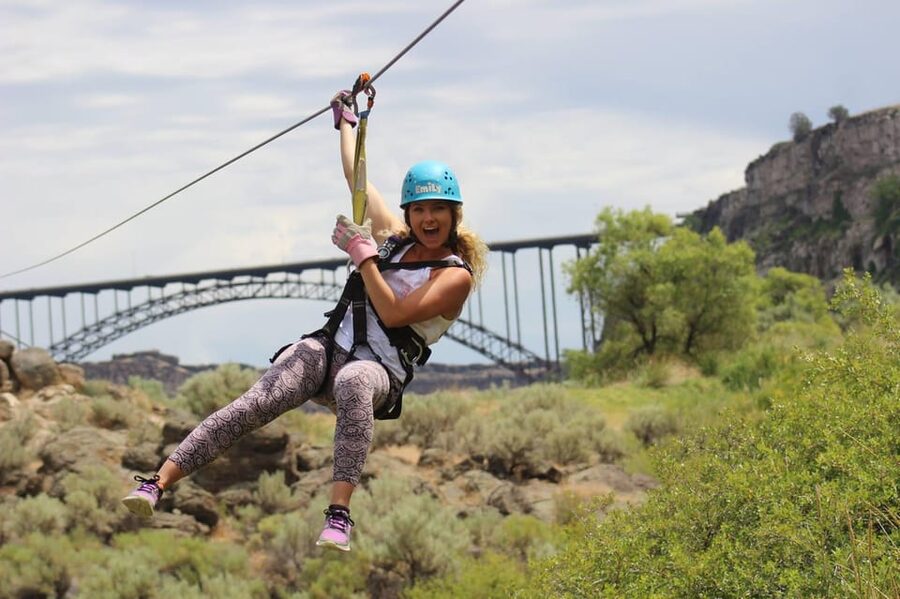
The best part of this 90-minute zip line tour is the setting. You sail over Idaho’s Snake River Canyon at speeds of up to 25 mph, with the river below, the canyon floor beneath you, and I.B. Perrine Bridge in view. The final line stretches 1,750 feet, longer than the bridge itself.
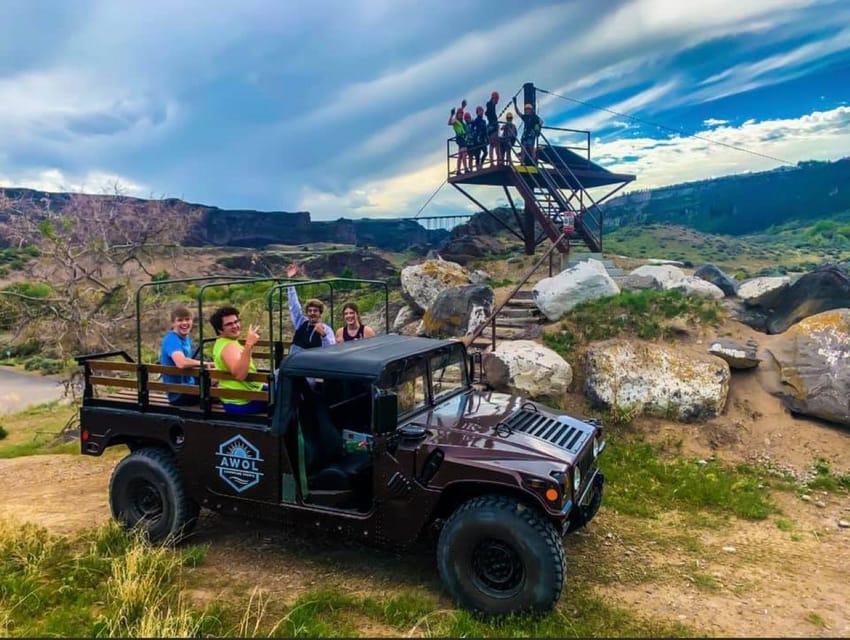
I like two things here: four separate lines give you more than one quick thrill, and the guides add stories about the canyon’s geology, plants, animals, and past. I also like that the ride to the course comes by Army HumV, turning the transfer into part of the outing.
The main consideration is physical. You’ll walk, climb stairs, and handle zip line equipment, so this is not a sit-back sightseeing trip. The 264-pound weight limit, closed-toe shoe rule, and restrictions for people with certain medical conditions also matter when deciding if it fits you.
Key points at a glance
- Four canyon zip lines: You get a full course rather than a single short run.
- A 1,750-foot final line: The longest line carries you farther than I.B. Perrine Bridge.
- Views at up to 25 mph: Look for the Snake River, canyon floor, bridge, rock walls, and local plant and animal life.
- Army HumV transport: The ride from the park to the course and back is included.
- Two ACCT-certified guides: Guides provide safety instruction, equipment help, and English commentary.
- A clear fitness cutoff: Walking and stairs are part of the experience, and participants must weigh 264 pounds or less.
Four lines above the Snake River Canyon
AWOL Adventure Sports places this experience in one of southern Idaho’s most striking outdoor settings. You are not simply clipped onto a cable in a forest or amusement park. The course takes you through the open air of the Snake River Canyon, where the scale of the rock walls and the drop toward the canyon floor shape the whole ride.
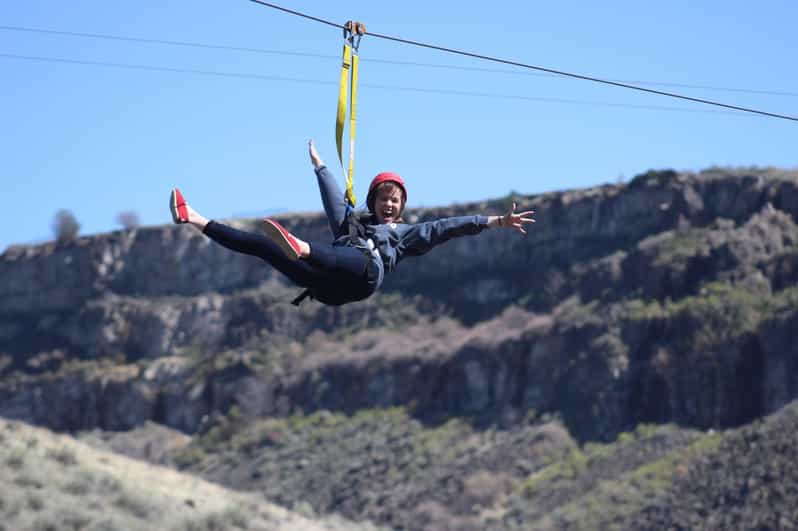
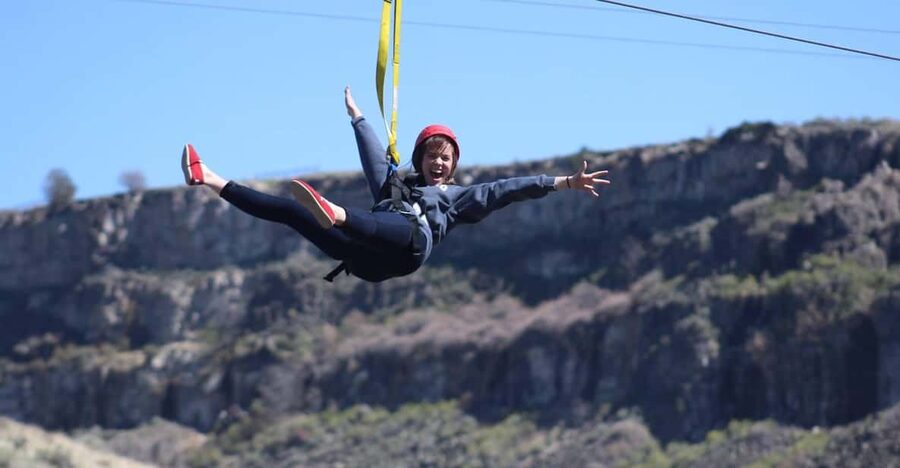
You will reach speeds of about 25 mph. That is fast enough to feel exciting, but the four-line format gives you time to settle in. The first line can help you get used to the harness, body position, and sensation of moving through open space. By the later lines, you have a better feel for the ride and can pay more attention to the scenery.
The course ends with its star feature: a 1,750-foot line. That distance is longer than I.B. Perrine Bridge, so you get a long stretch of open-air travel rather than a quick burst followed by a landing platform. I like this progression because the experience builds toward something memorable instead of using its biggest moment at the start.
You should expect the views to compete with the thrill. Look down toward the river and canyon floor, then up and across toward the bridge and rock formations. The open setting also means the scenery is not hidden behind trees or buildings. On the other hand, the very openness that makes the views special may make the ride feel more exposed if heights bother you.
More Waterfall Zipline Tours in the USA
- Big Island Zipline Tour Near Akaka Falls (250-ft Waterfall!)
★ 5.0 · 1,077 reviews - Big Island: 9-Line Waterfall Zipline Experience
★ 5.0 · 1,057 reviews - Big Island: 8-Zipline & Suspension Bridge Waterfall Adventure
★ 5.0 · 914 reviews
Starting at the park and riding an Army HumV
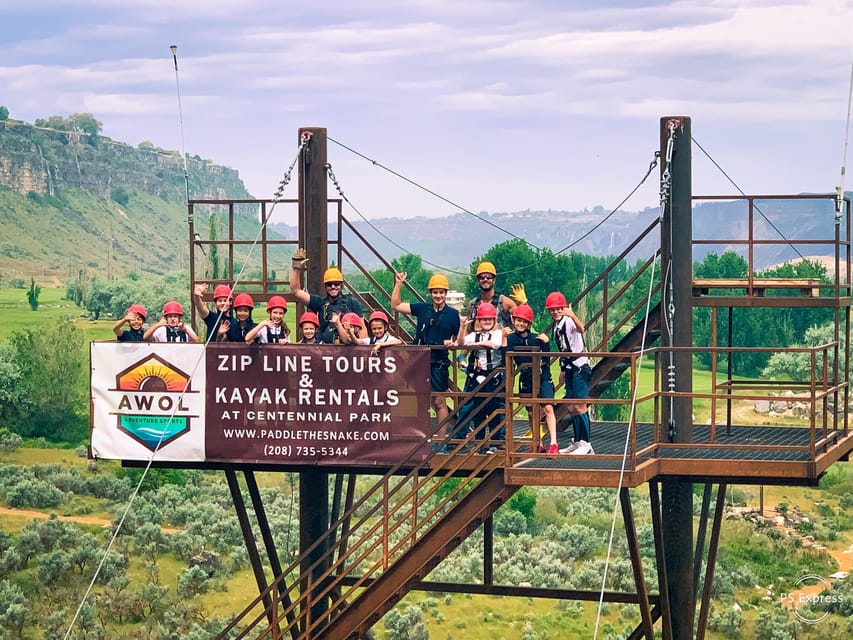
Your meeting point is a trailer and shipping container in the northwest corner of the park. That description is useful because it is more specific than simply saying to meet at the park. Give yourself enough time to find that corner and check in before the scheduled start.
From the park, an Army HumV takes you to the zip course. The ride is included in the $70 price, and it keeps you from having to arrange separate transport to the launch area. It also gives the outing a bit of character. You are not just walking from a parking area to a platform, then leaving. The vehicle transfer helps connect the park setting with the canyon course.
The HumV returns you to the park at the end. That matters for planning, especially if you have arranged another activity or meal afterward. The full experience lasts about 90 minutes, so allow that entire period rather than thinking of the activity as only the time spent on the cables.
Water is included. Still, closed-toe shoes are essential, and you cannot bring a backpack onto the course. Pets are not allowed, and open-toed shoes or bare feet are prohibited. Keep what you bring simple so you are not trying to manage loose items around the gear and platforms.
Safety instruction from guides who keep things light
Two professional guides accompany each outing, and both are ACCT certified. That certification is a useful sign that the guides are trained within recognized challenge-course and zip line safety standards, though you still need to listen carefully and follow every instruction.
The strongest pattern in the available feedback is the guide team. Recent guide names have included Braxton, Cade, Nate, Avery, Liam, and Lucy. Specific praise focused on clear explanations, patient teaching, friendly help, and an upbeat attitude. That is important on a zip line because the quality of the briefing can shape how relaxed you feel on the first cable.
Expect the guides to explain how to use the equipment and how to move through the course. They also encourage you to challenge yourself, but that should not mean being pushed beyond your comfort level. If you are nervous, say so early. Clear communication is the simplest way to make the experience safer and more enjoyable.
The guide commentary adds value beyond the mechanics. You will hear about the canyon’s geology, history, plants, and wildlife. Those details give the scenery more meaning. Instead of seeing only a dramatic drop and a bridge, you get some context for the rock, river, and living things around you.
The guide quality is not a minor extra here. When the activity lasts 90 minutes and includes four lines, you spend a fair amount of time learning, waiting for instructions, and moving between launch points. Friendly, organized guides make those transitions easier.
What each stage feels like
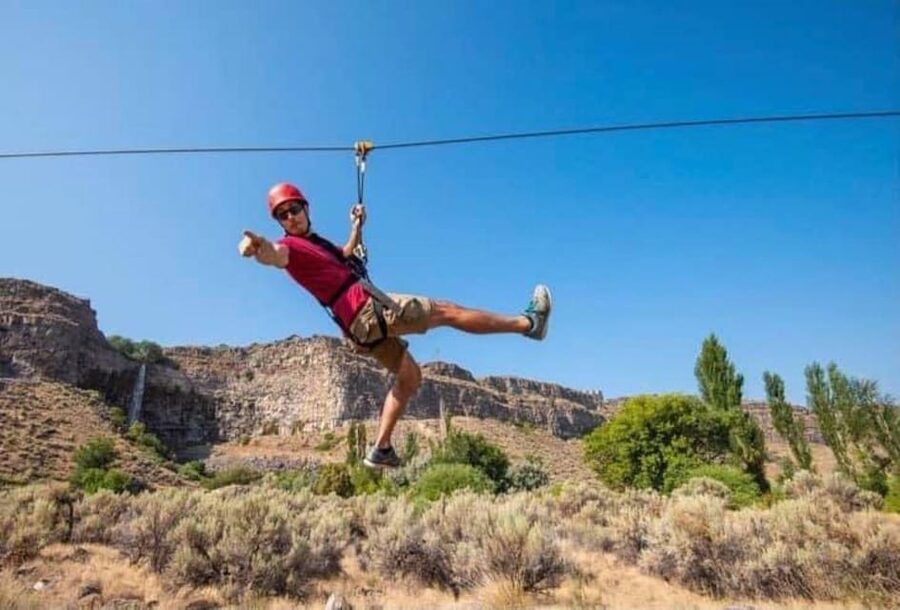
The first stage is check-in at the northwest corner of the park. You confirm your place, meet the guides, and prepare for the course. Since the meeting point is described as a trailer and shipping container, do not assume a large visitor center or formal building will guide you to the right spot.
Next comes the Army HumV transfer. This is a practical ride, not a separate sightseeing tour, but it is still a distinctive part of the outing. You travel from the park to the course with the group, then return the same way after the zip lines.
At the course, the guides handle the safety briefing and equipment process. You will need to walk and climb stairs, so the experience calls for moderate fitness. This is the point where you should mention any concern that could affect your participation, especially if heights, stairs, or harnesses are a problem.
The four zip lines then form the heart of the tour. Each cable gives you another chance to take in the canyon and improve your comfort with the activity. The exact order and style of each line are not specified, so you should not expect a particular racing format or a guaranteed position on every line.
The final 1,750-foot run is the big finish. At that length, it gives you time to look beyond the launch and landing areas. The view toward I.B. Perrine Bridge is one of the outing’s defining sights, while the river and canyon floor provide the downward perspective that makes zip lining here different from a standard treetop course.
Finally, you ride the Army HumV back to the park. Water is included, but bring only what is permitted. Backpacks cannot be taken along, so plan to leave larger personal items behind as directed at the meeting point.
Same trees, a different way down:
- Koloa Zipline in Kauai
★ 5.0 · 6,764 reviews - Oahu’s North Shore: 8-Line Zipline Adventure
★ 5.0 · 3,616 reviews - 7-Line Zipline Experience in Sevierville
★ 5.0 · 2,872 reviews - 7-Line Maui Zipline on the North Shore
★ 4.5 · 1,648 reviews
Why the $70 price can make sense
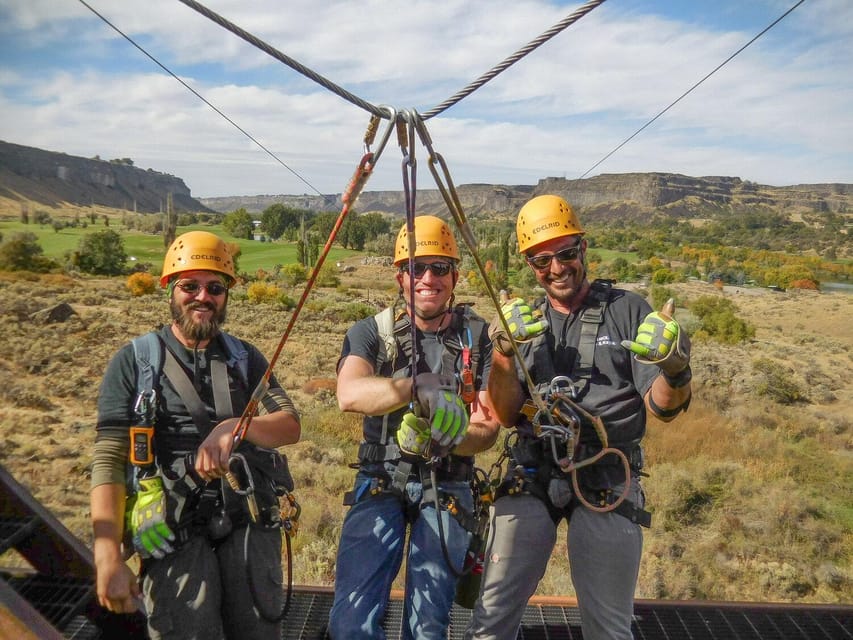
At $70 per person, this is not the cheapest way to see the Snake River Canyon. The price becomes easier to justify when you count the full package: four zip lines, two professional ACCT-certified guides, water, and transport by Army HumV in both directions.
You are also paying for access to a purpose-built course and the instruction needed to use it safely. A single short zip line might offer a quick thrill, but four lines give you more time in the activity and a better chance to settle into it. The long final line helps the value, since it is the part most likely to stay with you after the tour.
The tour is a better deal for someone who wants an active canyon experience than for someone seeking a broad sightseeing trip. You will not spend 90 minutes slowly stopping at viewpoints. You will spend that time moving, listening, climbing, and riding.
The guides are another reason to consider the cost. Past outings have highlighted Braxton, Cade, Nate, Avery, Liam, and Lucy for clear instruction, kindness, and a fun approach. Guide assignments can change, so treat those names as examples rather than a promise that a particular person will lead your tour.
Who should book this experience
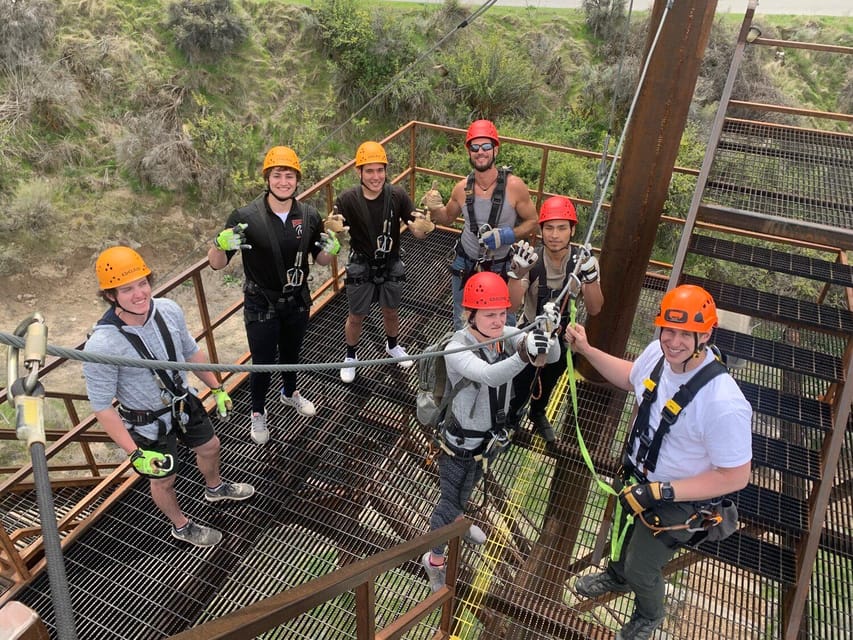
I would recommend this tour to first-time zip liners who want a scenic setting and direct instruction. The guides are there to explain the process, and the four-line format gives you room to gain confidence as you go.
It also suits active adults, older children who meet the weight and age rules, and anyone who wants to see the canyon from a different angle. Children under four are not allowed, and children under 50 pounds cannot participate. Those limits are important because a child may meet the age requirement but still fall below the minimum weight.
You should also be comfortable with stairs and some walking. This is not suitable for wheelchair users or people with mobility impairments. It is also not recommended for people with back problems, heart problems, or pregnant women.
The upper weight limit is 264 pounds, or 120 kilograms. That is a firm practical detail, not a minor note. Check it before booking so you do not arrive for an activity you cannot safely join.
If you dislike heights, think carefully before reserving. The supplied information does not describe an alternative activity for anyone who changes their mind at the course. The guides can provide support and instruction, but the experience is still built around being suspended above the canyon.
What to bring and what to leave behind
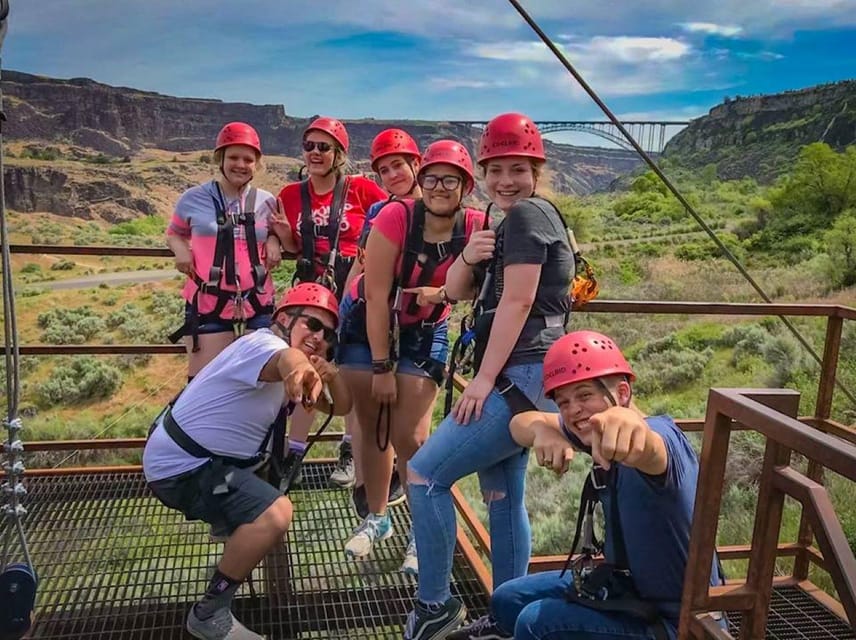
Wear closed-toe shoes with a secure fit. Open-toed shoes and bare feet are not allowed, and footwear is especially important when walking, climbing stairs, and working around course platforms.
Do not bring a backpack. Pets are also prohibited. Since the activity includes water, you do not need to plan around going without a drink, though the available information does not specify how much water is provided.
Keep your clothing and personal items practical. The supplied rules specifically identify shoes and backpacks, so follow any additional instructions given at check-in about loose belongings or equipment.
The best preparation is simple: arrive at the northwest corner of the park, wear proper shoes, know the weight and health restrictions, and allow the full 90 minutes. That avoids the most common preventable problems before the first line begins.
Handling the mixed scores fairly
The overall rating is 4.1 from eight ratings, which points to a generally favorable experience but not a perfect one. The positive comments repeatedly focus on the guides, especially their explanations, patience, friendliness, and ability to make the outing feel special.
One low score came from someone who could not attend and was waiting for a refund. That complaint concerns the refund process rather than the zip line itself, so it should not be treated as evidence about the canyon course or guide performance. Another lower rating still described the guides as fantastic and fun, which suggests the weaker score may not reflect the instruction.
The practical lesson is to read the score with some care. The guide team appears to be the most consistent strength, while the activity’s suitability depends heavily on your comfort with heights, stairs, and outdoor gear. You should also understand the cancellation rule before booking: cancellation up to 24 hours in advance qualifies for a full refund, and you can reserve now and pay later.
Is the Snake River Canyon zip line worth booking?
Book it if you want an active way to see the canyon and like the idea of four separate runs, a long 1,750-foot finish, and an Army HumV ride. The $70 price is reasonable for the amount of equipment, instruction, transport, and time included.
Skip it if you want a quiet viewpoint, cannot manage stairs, dislike heights, or fall outside the age, weight, or health requirements. For the right participant, the setting and final line make this more than a quick amusement ride. You get a brisk, well-structured outing with strong guide support and a memorable view of I.B. Perrine Bridge.
FAQ
How long does the Twin Falls zip line tour last?
The activity lasts about 90 minutes, including the park transfer, instruction, four zip lines, and the return ride.
How many zip lines are included?
The course includes four separate zip lines.
How fast do you travel?
The zip lines reach speeds of up to 25 mph.
How long is the final zip line?
The final line is 1,750 feet long, which is longer than I.B. Perrine Bridge.
What can you see during the ride?
You can view the Snake River, the canyon floor, I.B. Perrine Bridge, and the surrounding canyon. Guides also discuss the area’s history, geology, plants, and wildlife.
Where do you meet the tour?
The meeting point is a trailer and shipping container in the northwest corner of the park.
What should you wear?
Closed-toe shoes are required. Open-toed shoes and bare feet are not permitted.
Is the tour suitable for children?
Children under four years old are not allowed. Children must also weigh at least 50 pounds, or 23 kilograms.
Who cannot take part in the tour?
The activity is not suitable for pregnant women, people with back or heart problems, people with mobility impairments, wheelchair users, people over 264 pounds or 120 kilograms, or children under 50 pounds. Some walking and stair climbing are required.
Newest lines around the USA
- Hakalau: 9-Line Zipline Adventure with Umauma Falls View★ 4.5 · 7 reviews
- New River Gorge, WV – Zip Line Tour★ 5.0 · 7 reviews
- Tree Tops Zip Line Canopy Tour★ 5.0 · 32 reviews
- Zipline Canopy Tour- ArborTrek at Smugglers Notch Resort★ 5.0 · 9 reviews
- Wildman Zip Line Tour★ 5.0 · 10 reviews
- Zipline and Adventure Tower at Ryze Adventure in Missouri★ 5.0 · 4 reviews
- Zipline the Goliath in The Smoky Mountains★ 5.0 · 5 reviews
- 7 Line Waterfall Canopy Zipline Course★ 5.0 · 6 reviews
Waterfall Zipline Tours, compared.
Outdoor Ziplining, Waterfalls & Speed boat in Puerto Vallarta
Read our review →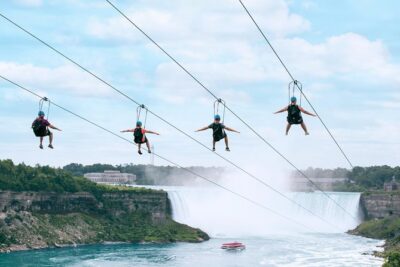
Zipline To The Falls in Niagara Falls, Canada
Read our review →
Big Island Zipline Tour Near Akaka Falls (250-ft Waterfall!)
Read our review →
Big Island: 9-Line Waterfall Zipline Experience
Read our review →
Full-Day Zipline and Waterfall Rappelling Adventure Near San Juan
Read our review →Samui Zipline FLY & Fun Tree Bridge Jungle Cafe & Waterfall
Read our review →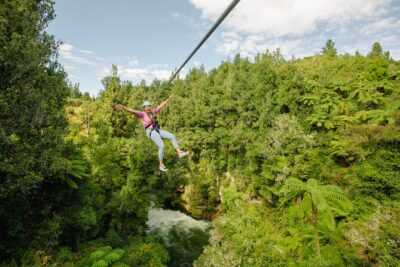
Browse the lists this ride appears in